
AI in Human Resources: Use Cases and Best Practices for HR Teams

Key Facts at a Glance
The use of artificial intelligence is currently revolutionizing the entire field of human resources. But this is not just a simple software update: AI does not merely transform tools, it transforms work itself. For HR teams, this means a fundamental shift in everyday HR work – from administrative tasks toward the strategic shaping of the working world. While AI tools and intelligent chatbots offer enormous efficiency in automating routine tasks, there are clear challenges and legal limits, particularly when it comes to personnel decisions. At our AI HR Roundtable on March 5, keynote speaker Andreas Bachmann of Adacor emphasized: systems that make essential decisions about hiring or termination are classified as high-risk systems under the EU AI Act. In this article, you will learn where AI can be meaningfully deployed in human resources, how to optimize HR processes in a legally compliant way, and why the human factor remains indispensable in the HR department.
The Shift in Everyday HR: How AI Is Transforming People Work
The use of AI in human resources has long been more than just a technological trend coming out of the IT department. As was aptly put at our AI HR Roundtable on March 5: artificial intelligence does not simply transform tools, it transforms work itself. What we are currently experiencing is not an ordinary software update, but a fundamental transformation of the working world that profoundly changes how companies use knowledge and create value.
For HR teams, this represents a historic opportunity: the HR department takes on the central role of actively shaping this AI transformation. However, implementing intelligent HR solutions and new AI technology requires a deep understanding from those responsible. As with digitalization in finance, people work is likewise about structuring enormous volumes of data efficiently and becoming more confident in handling machine-based systems. Our article on AI in the working world takes a detailed look at these far-reaching changes.
Meaningful Use Cases for AI in Human Resources
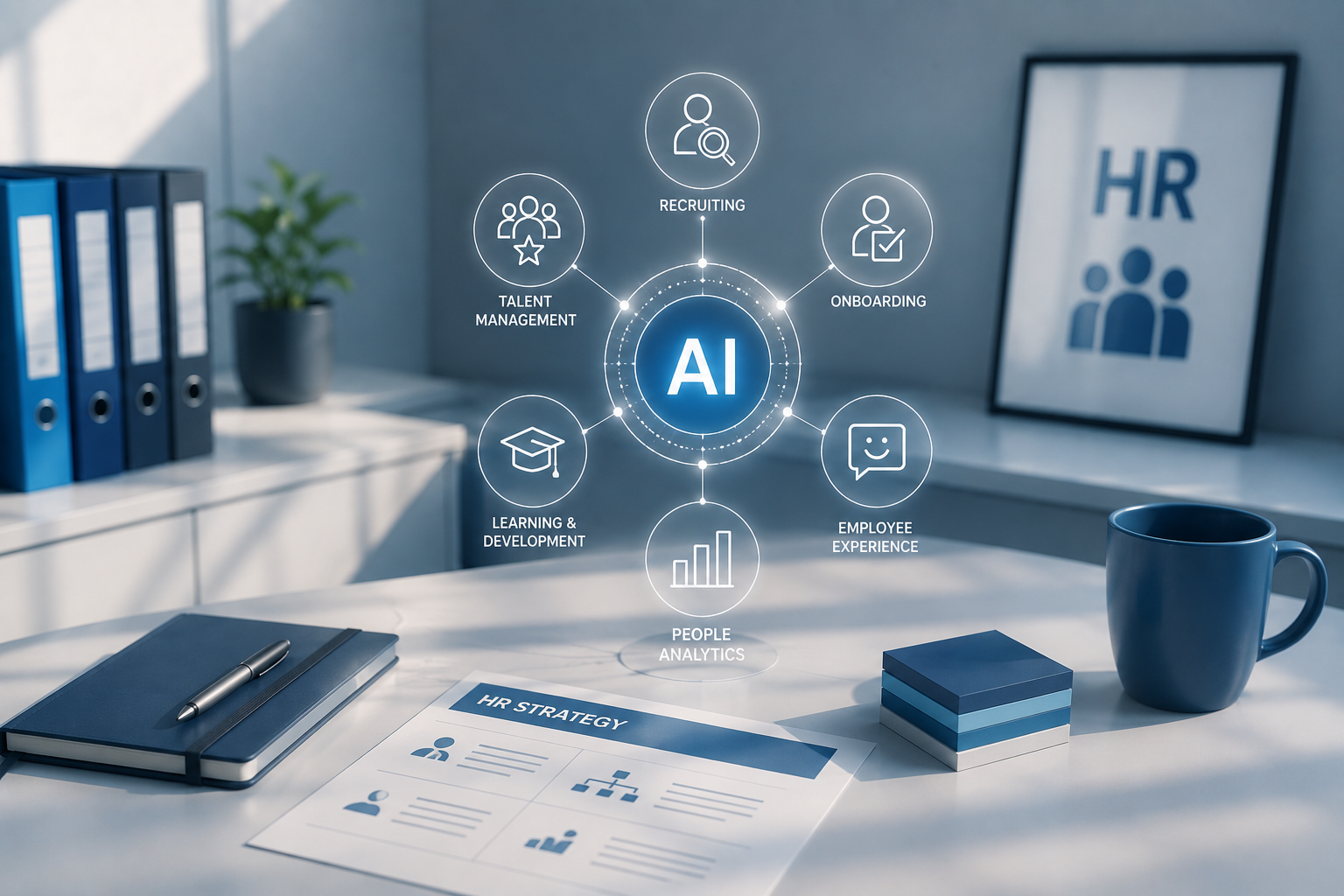
Which tasks in everyday HR can actually be improved by intelligent AI systems? The answer lies in the targeted automation of recurring administrative processes and in self-service. Along the so-called “Employee Lifecycle Map,” numerous HR areas emerge in which AI support offers real added value.
In people management, this ranges from optimizing the recruiting process – for example through intelligent algorithms in active sourcing and candidate selection – to interactive chatbots that clarify standardized questions during pre- and onboarding in real time. In the area of employee retention as well, data-driven analyses help to foster individual personnel development or to match suitable mentoring programs. Even formal tasks, such as drafting employment contracts, can be highly automated by specialized AI agents – such as a “people management agent” – and output as a finished Word document.
These examples show how efficiency and productivity can be massively increased, giving HR professionals more time for the strategic support of people.
Limits and Risks: Where Humans Must Decide (EU AI Act)
Despite all the enthusiasm for the technological changes, there are clear legal and ethical limits to the use of AI that companies absolutely must observe. This very topic was at the core of the keynote by Andreas Bachmann (CEO of Adacor) at our AI HR Roundtable on March 5. He strongly emphasized that AI systems must be carefully evaluated, especially with regard to the new EU AI Act.
According to the requirements of the AI Act, intelligent applications in human resources (Annex III, Employment & Workforce Management) fall into the high-risk category when they make or substantially influence personnel decisions. This applies above all to the filtering and evaluation of applications as well as decisions about hiring, promotion, or termination. The decisive point, however, is this: pure support tools without a decision-making character of their own – such as ChatGPT used as a formulation aid – do not automatically fall under this strict classification.
Another critical area is the avoidance of bias. AI models can reproduce historical discrimination, which is why tools for bias testing (according to AGG criteria such as age, gender, or origin) are essential. At the end of the various phases of the recruiting process and HR work, the human factor must always come first: empathy, cultural fit, and strategic foresight are abilities that no machine can replace.
Change Management: The New Role of HR Professionals
Advancing automation and generative AI by no means make HR teams obsolete – quite the opposite. More than ever, the HR department is evolving into a strategic driver of the company. The guiding principle is: HR must master and anticipate AI. Only those who command the technology themselves can successfully lead the entire organization through the AI transformation and actively shape the developments of the working world.
This requires professional change management. When AI tools – such as Copilot or intelligent agents – soon empower every employee to delegate tasks and act as a manager, leaders and staff must be given the right guardrails. The targeted development of AI competence and continuous training create the trust needed to handle new systems.
Valuable information and practical strategies on this are provided in the article on Coaching Through Change: Strategies for Leading Teams Through Digital Transformation. Above all, it becomes clear: the more repetitive processes are outsourced to machine learning and deep learning, the more important the strategic orientation of people becomes. Read our in-depth article on this as well: HR as a Strategic Partner.
Strengthening HR Strategy with AI Competence
The successful use of AI in human resources is no longer a future scenario, but lived everyday HR practice. From the first candidate approach through onboarding to employee retention, intelligent AI systems and chatbots offer enormous potential to increase productivity. The automation of administrative HR tasks creates the necessary freedom for HR professionals to focus on what matters most: people and strategic HR work.
At the same time, the legal and ethical limits – keyword EU AI Act and bias avoidance – must never be lost sight of. When personnel decisions are made, the final decision must always remain in human hands. Especially when filling highly complex vacancies, the right instinct for the market and the corporate culture is irreplaceable. In this context, also learn why IT leadership roles are better filled externally, in order to drive the AI transformation in your company forward with the best talent.
Frequently Asked Questions (FAQ)
How exactly does artificial intelligence support everyday HR work?
In everyday HR work, AI primarily takes over time-consuming, repetitive tasks. These include, for example, the automated screening of résumés, scheduling interviews, answering standard questions via chatbots (pre- and onboarding), as well as creating formal documents such as employment contracts or references. This gives HR teams valuable time for strategic personnel development.
What does the EU AI Act mean for the use of AI in human resources?
The EU AI Act classifies AI models in human resources as high-risk systems when they make or substantially influence essential personnel decisions (e.g., for hiring, promotion, or termination). Pure support tools that merely assist recruiters with text generation or administrative processes generally do not fall under these strict requirements.
Will HR professionals be replaced by AI technology in the future?
No. The introduction of generative AI and automation does change the role of the HR department, but by no means makes it obsolete. HR is evolving into a strategic partner and change manager. Complex decisions, cultural fit, negotiation skills, and empathy remain deeply human abilities that are indispensable for successful talent management.
Key Takeaways
- AI transforms work, not just tools: The use of AI in HR is not a simple software update but a fundamental shift – from administrative routine toward the strategic shaping of the working world.
- Clear use cases along the employee lifecycle: From active sourcing and recruiting through pre- and onboarding chatbots to employee development and offboarding, AI automates recurring tasks and frees up time for people.
- EU AI Act sets the limits: Systems that make or substantially influence personnel decisions (hiring, promotion, termination) count as high-risk. Pure support tools – like ChatGPT as a formulation aid – generally do not.
- Avoiding bias is essential: AI models can reproduce historical discrimination, so regular bias testing (along AGG criteria such as age, gender, or origin) and an ethical framework are indispensable.
- The human factor stays decisive: Empathy, cultural fit, and strategic foresight cannot be replaced by any machine – the final personnel decision must always remain in human hands.
- HR becomes the change manager: Only those who master AI themselves can guide the whole organization safely through the transformation – making AI competence and continuous training key.



.png)


